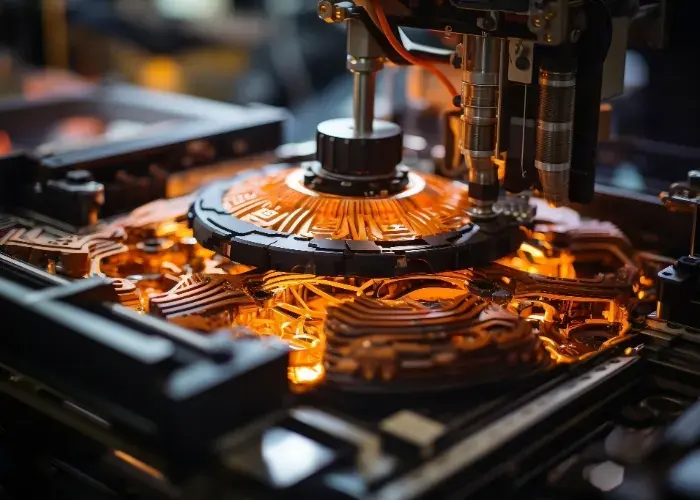
Rapid prototyping
Validate form, fit and function early, then revise and reprint without tooling.
Fused Deposition Modeling
UltraTec 3D provides FDM — Fused Deposition Modeling — 3D printing for engineering and product teams across Dubai and the UAE. We build functional prototypes, jigs, fixtures, enclosures and custom parts in PLA, ABS, PETG, Nylon and TPU, at a layer resolution of 100–300 microns, printed directly from your CAD geometry.
Speak to an engineer directly on +971 4 294 5479
The technology
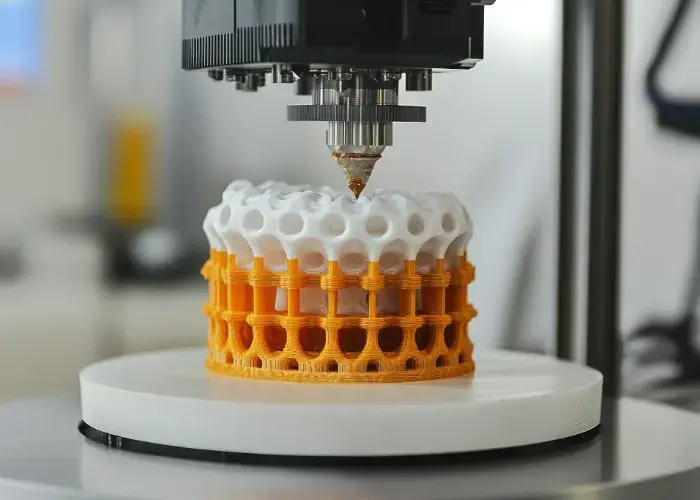
FDM is an additive manufacturing process in which a thermoplastic filament is melted and extruded through a heated nozzle, then deposited layer by layer until the part is complete.
Fused Deposition Modeling — also called FFF, fused filament fabrication — starts from a 3D CAD model. The model is sliced into horizontal layers, and the printer traces each layer by extruding molten thermoplastic along a path. Each layer cools, solidifies and bonds to the layer beneath it.
Because the part is built upwards rather than cut away, geometry that would be difficult or wasteful to machine costs nothing extra to produce. Overhanging features are held up by sacrificial support structures that are removed once the build finishes.
The practical consequence for engineers is that FDM parts come out in the same families of thermoplastic used for injection moulded components — so the part can be tested, not just reviewed.
CAD model
Your 3D geometry
Slicing
Sliced into layers
Filament
Thermoplastic feedstock
Heated nozzle
Melted and extruded
Layer deposition
Built layer by layer
Finished part
Supports removed, finished
Why FDM
FDM is the process we reach for when a part has to do a job rather than sit on a desk.
FDM builds in production-grade thermoplastics, so a prototype can be assembled, loaded and function-tested like the finished component rather than only inspected.
PLA, ABS, PETG, Nylon and TPU cover rigid, impact-resistant, chemically durable and flexible requirements from one process.
Printing directly from CAD removes tooling from the loop, so a revised design can be built and evaluated without retooling cost.
Internal channels, lattice infill and organic shapes that would be difficult to machine are built layer by layer at no extra tooling cost.
Short runs and one-off components are economic to produce where injection moulding could not justify a tool.
Large assemblies are produced in sections and joined — our FDM-built GITEX Formula 1 car measures 5 m × 2 m.
Applications
The parts we print most often with FDM, across engineering, product development and manufacturing.
Validate form, fit and function early, then revise and reprint without tooling.
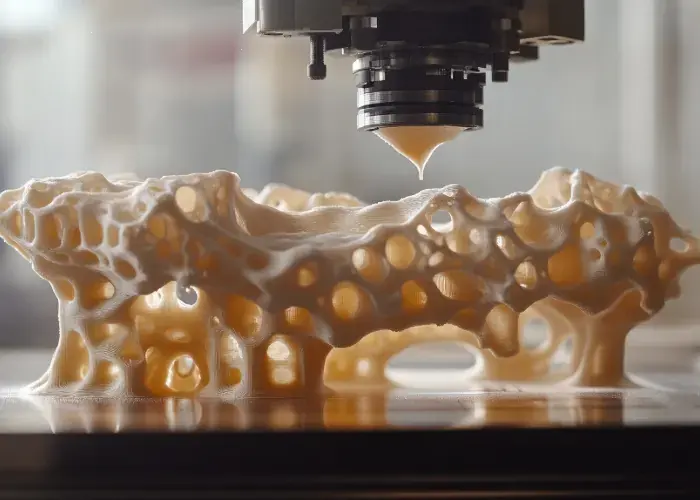
Workholding, alignment and assembly aids made to suit one specific job.
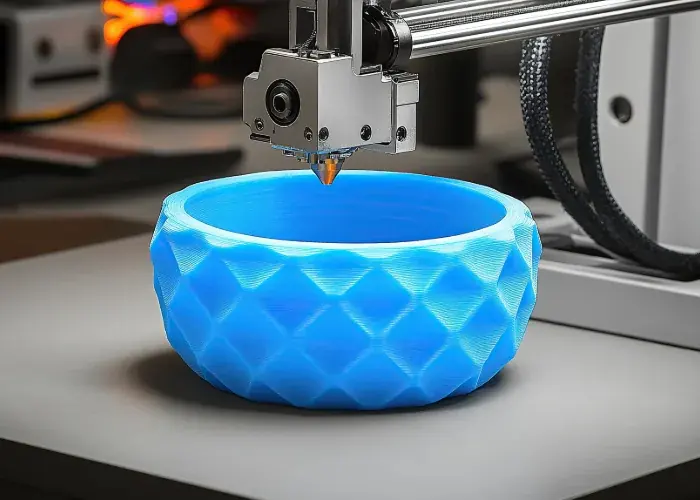
End-use components in thermoplastics chosen for the load and environment.
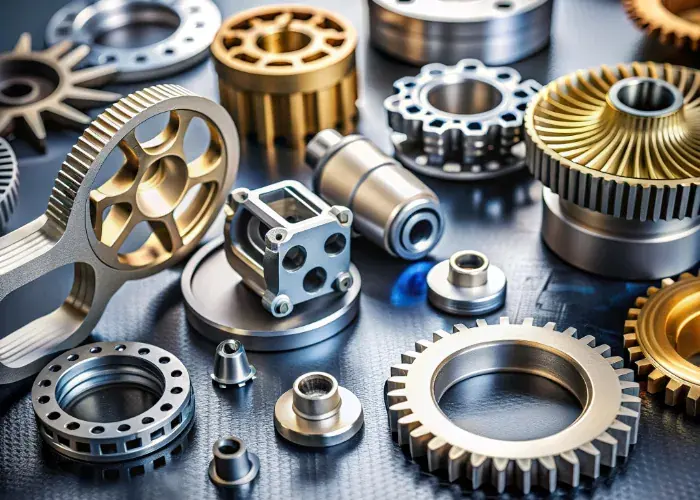
Casings and brackets for electronics and instrumentation, printed to fit.
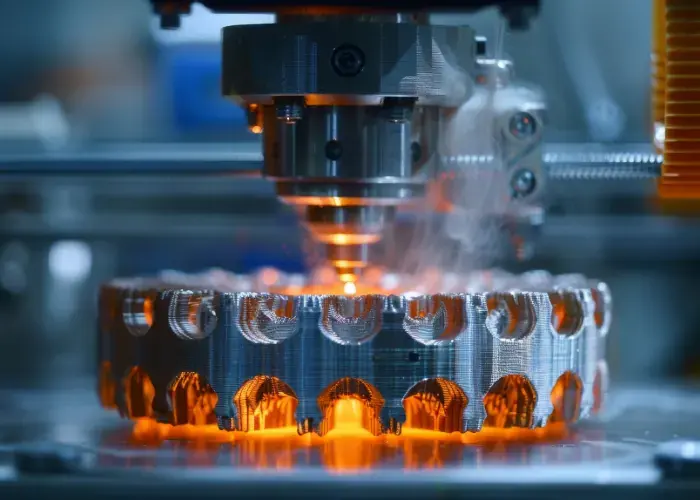
Obsolete or hard-to-source parts rebuilt from a drawing, sample or scan.
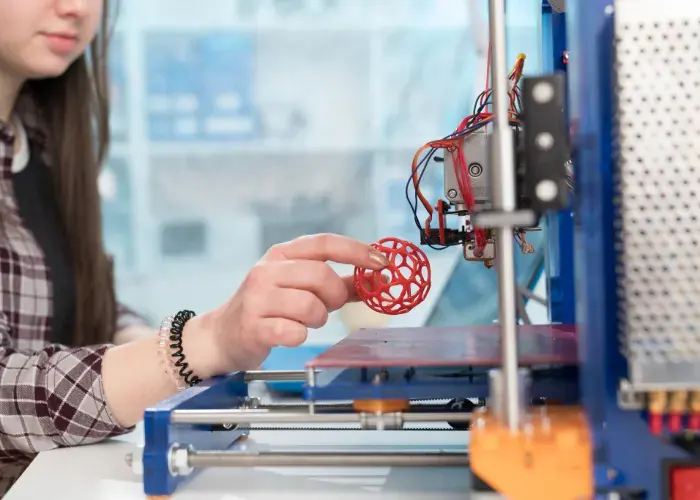
Short manufacturing runs where committing to a mould is not justified.
Materials
UltraTec 3D prints FDM parts in five thermoplastics. The right one depends on how the part is loaded and where it lives.
Concept models and visual prototypes
Typical applications
Appearance models, design reviews, form-and-fit checks
Impact-resistant parts with higher heat tolerance
Typical applications
Housings, brackets, large display builds, automotive trim
Durable parts exposed to moisture or chemicals
Typical applications
Guards, containers, fluid-adjacent and outdoor components
Tough, wear-resistant functional parts
Typical applications
Gears, clips, living hinges, bushings, moving assemblies
Flexible, rubber-like components
Typical applications
Gaskets, seals, grips, protective housings, dampers
Selection guide
Start from what the part has to withstand, not from the material name.
| If your part needs… | Material | Why |
|---|---|---|
| General prototyping and appearance models | PLA | Prints cleanly with good detail when the part will not be load-bearing. |
| Impact resistance and higher operating temperature | ABS | Tougher than PLA and tolerates heat better; also the material used on our 5 m × 2 m GITEX F1 car build. |
| Moisture, chemical or outdoor exposure | PETG | Chemically resistant and less prone to warping than ABS. |
| Wear, fatigue and repeated movement | Nylon | Abrasion and fatigue resistance suit gears, hinges and moving parts. |
| Flexibility, sealing or vibration damping | TPU | Elastomeric behaviour that rigid thermoplastics cannot provide. |
Capabilities
What we can confirm up front. Build volume and dimensional tolerances depend on the geometry and the material, so we confirm those against your specific part rather than publishing a blanket figure.
Design for FDM
General design considerations that come from how fused deposition works. Exact limits depend on the material and geometry — send us the model and we will review it with you.
Recommended
Keep walls comfortably thicker than a single extruded bead so they build as solid material.
Watch out for
Very thin walls can print as a single trace and break away from the part.
Recommended
Angle unsupported faces back towards the build plate so each layer rests on the one beneath.
Watch out for
Steep or horizontal overhangs need support material and leave witness marks.
Recommended
Keep unsupported spans short, and give bridges solid anchor points at both ends.
Watch out for
Long spans can sag before the extrudate cools.
Recommended
Where a hole is a functional fit, allow for post-drilling or reaming to final size.
Watch out for
Vertical holes tend to print slightly undersize; horizontal holes can deform at the crown.
Recommended
Design deliberate gaps between mating parts rather than modelling them touching.
Watch out for
Zero-clearance assemblies usually fuse together and will not move.
Recommended
Tell us the loaded direction — layer adhesion is the weakest axis, so we orient to suit it.
Watch out for
Support contact areas are rougher; keep them off critical or cosmetic faces.
How it works
The route a part takes through our facility, from the file you send to the component we hand back.
Send 3D CAD geometry. If you only have a physical part, our 3D scanning service can capture it first.
3D design & scanningWe review the geometry for FDM — wall sections, overhangs, orientation and where the part will be loaded.
Product developmentWe agree the thermoplastic against how the part is used: load, temperature, chemical exposure or flexibility.
The part is built layer by layer, with layer resolution and orientation set for the job rather than by default.
Support removal, and painting or post-processing in-house where the part calls for a finished surface.
Paint & post-processingParts are delivered across Dubai, Sharjah, Abu Dhabi and the wider UAE.
Quality
Print quality on FDM is decided before the machine starts, by choices a slicer will not make for you.
Orientation set against the load
Layer adhesion is the weakest axis on any FDM part. We orient the build around how the part is stressed, not around what prints fastest.
Layer resolution chosen per part
Anywhere in the 100–300 micron range, traded off between surface finish and build time for the job in hand.
Material matched to the application
Load, temperature, chemical exposure and flexibility drive the material decision before printing begins.
Finishing in-house
Support removal, painting and post-processing are handled by our own paint and post-processing team.
Process comparison
FDM is not always the right answer. Here is how the three processes differ, and we will tell you when one of the others suits your part better.
| Characteristic | FDM | SLA | SLS |
|---|---|---|---|
| Material type | Thermoplastic filament — PLA, ABS, PETG, Nylon, TPU | Liquid photopolymer resin cured by light | Polymer powder fused by laser |
| Typical strengths | Production-grade thermoplastics, wide material choice, large parts | Fine feature detail and smooth as-built surfaces | Strong parts with consistent properties in all directions |
| Typical applications | Functional prototypes, jigs, fixtures, enclosures, large builds | Detailed masters, fine models, smooth cosmetic parts | Durable functional components and complex assemblies |
| Surface characteristics | Visible layer lines; finishes well after post-processing | Smooth straight off the machine | Uniform matte, slightly grainy texture |
| Geometry & supports | Overhangs need support structures | Supports needed, removed after curing | Unfused powder supports the part — no support structures |
We also operate SLA, SLS and Multi Jet Fusion. See all 3D printing technologies we run, or our wider 3D printing services in Dubai.
Who we print for
Sectors we already serve from our Dubai facility.
Functional prototypes, jigs and fixtures for production environments.
FDM for engineering & manufacturingTrim, housings, fixtures and full-scale display builds.
FDM for automotiveReplacement components, assemblies and moving mechanisms.
FDM for mechanicalMassing studies, detail models and presentation pieces.
FDM for architectureLettering, display structures and event builds at scale.
FDM for signage & exhibitionScaled equipment models and demonstration assemblies.
FDM for oil & gasOur work
Projects from our portfolio where FDM was part of how the piece was built.
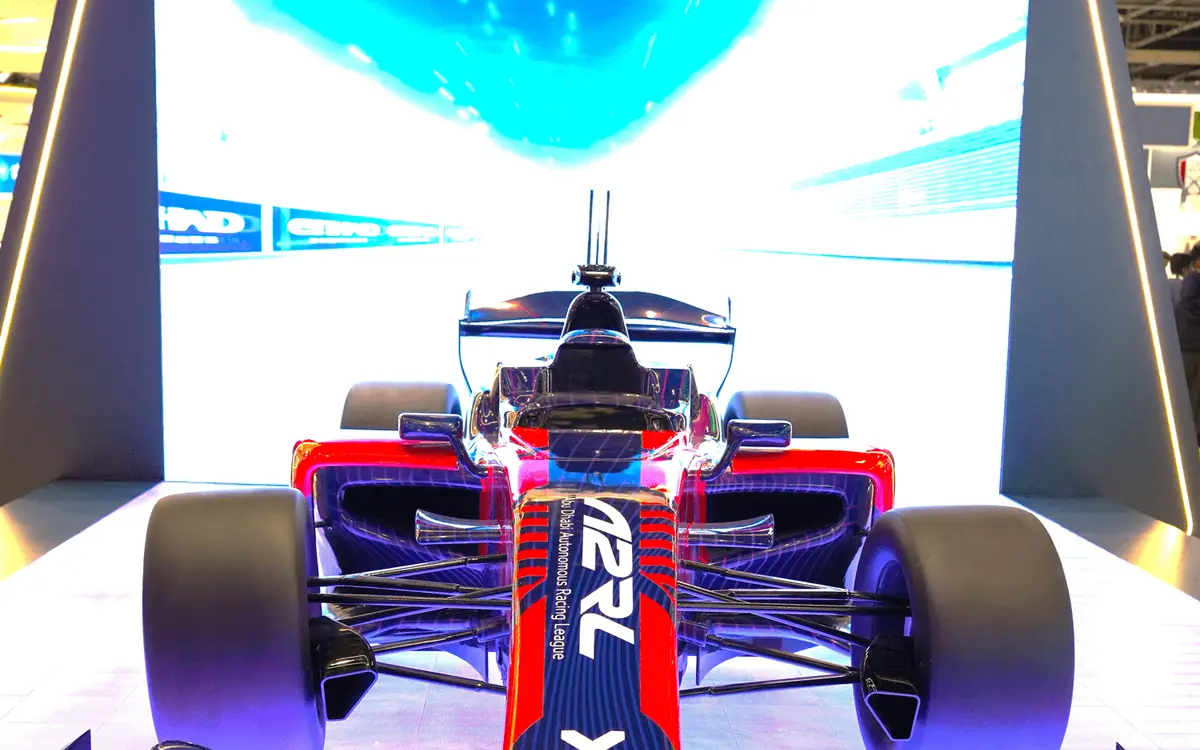
A full-size Formula 1 car produced by FDM in ABS and finished to a high-quality paint standard — built in sections and assembled to 5 m × 2 m.

Artistic signage including treasure scenes and a functional rotating plant gear system, produced using FDM together with SLA and SLS.
FAQ
FDM (Fused Deposition Modeling) is an additive manufacturing process in which a thermoplastic filament is melted and extruded through a heated nozzle, then deposited layer by layer until the part is complete. It is one of the most widely used 3D printing processes for functional prototyping and production parts.
A 3D CAD model is sliced into horizontal layers, then a filament is fed into a heated nozzle that extrudes molten thermoplastic along each layer path. Each layer cools and bonds to the one beneath it, building the part from the build plate upwards. Overhanging geometry is held up by support structures that are removed afterwards.
FDM is used for functional prototypes, jigs, fixtures, enclosures, replacement components and large-format parts. It suits design validation, tooling and low-volume production — parts that need to be handled, assembled or tested rather than only looked at.
UltraTec 3D prints FDM parts in PLA, ABS, PETG, Nylon and TPU. Between them these cover rigid appearance models, impact-resistant and heat-tolerant parts, chemically durable components, wear-resistant moving parts and flexible elastomeric parts.
Yes. Because FDM builds in production-grade thermoplastics, an FDM prototype can be assembled, loaded and function-tested like the finished component. It is often a cost-effective choice for functional prototypes and small production runs, which makes working through several design revisions practical.
Yes. Send your 3D CAD geometry and we will review it for FDM before printing. If you only have a physical part rather than a model, our 3D scanning service can capture the geometry first.
Layer resolution, part orientation, material choice and support placement have the largest effect. Layer height sets surface finish, orientation determines which axis carries load because layer adhesion is the weakest direction, and support contact areas leave marks on the surfaces they touch.
FDM extrudes molten thermoplastic filament layer by layer, while SLA cures liquid photopolymer resin with light. FDM gives production-grade thermoplastics and larger parts; SLA gives finer detail and smoother as-built surfaces. UltraTec 3D offers both, along with SLS and Multi Jet Fusion.
Yes. UltraTec 3D provides FDM 3D printing from its facility in Dubai, serving Dubai, Sharjah, Abu Dhabi and the wider United Arab Emirates.
Resources
Background reading on the technology behind the service — how fused deposition works, and where it fits.
Technology guideHow Fused Deposition Modeling builds objects layer by layer from a heated thermoplastic filament — the process step by step, where FDM performs well, and the trade-offs to design around.
Process deep diveA closer look at the mechanics of fused deposition — how the extrusion process works, its advantages and limitations, and the prototyping, tooling and functional-part applications it suits best.
Start a job
Send us your CAD geometry and we will review it for FDM — material, orientation and finishing — before anything is printed. UltraTec 3D prints and delivers across Dubai, Sharjah, Abu Dhabi and the wider UAE.

Get a Quote